Blog

  • Thoughts on "Iron Lung"

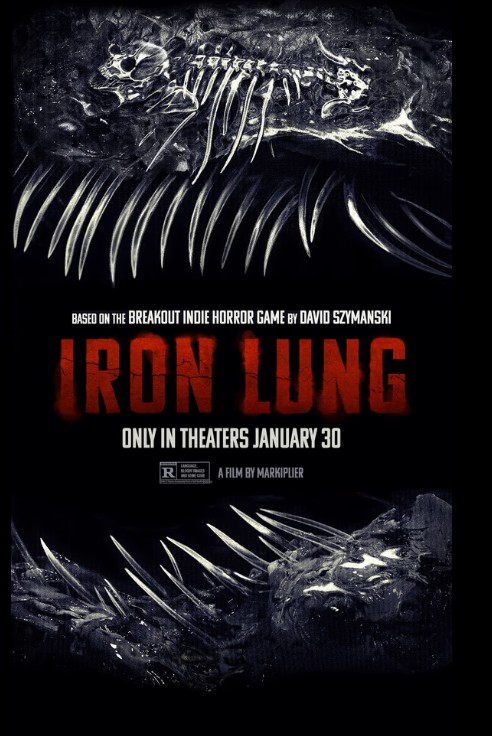
    The biggest issue I have with Iron Lung is how difficult it is to convince people that my opinions on it are genuine and not swayed by idolism. This is a film I’ve been looking forward to for three years, and it’s made by someone who I’ve been following since 2014 and genuinely admire a lot. I’m not exactly the most unbiased source in the world, so I need you to trust me when I say that this film really is that good. I am able to objectively criticize things I enjoy, as I came out of the FNAF 2 movie thinking “the practical effects and animatronics were really cool, but they shouldn’t let Scott within a hundred feet of the script ever again.” On the other side, I came out of Iron Lung thinking that it was everything I could have ever wanted it to be.

    The two biggest good-faith detractions I hear about this film is that it’s too slow and boring on occasion, and that the audio mixing is subpar. On the first point, I thoroughly agree. I am in the camp that believes the experience was enhanced by the shots that linger just a bit too long; the building dread and claustrophobia that results from suffocating in silence for minutes on end. I think it was an intentional choice that sacrificed mass appeal to stick to the creative vision and themes of the game it’s adapting. Cutting it down a half hour, like many have suggested, would have probably granted it a higher numerical score to a general audience, but I think it would have lost something essential in the process. I wouldn’t trade the monotonous first act for anything, as there’s no replacing the asphyxiating terror that it drags both Simon and the audience through, forcing them to live out every miserable moment in this sunken coffin in the hollow promise that there’s a light at the end of the tunnel. As it turns out, there is! It just isn’t the one you hoped it would be.

    On the side of the audio mixing, though, even I have to relent. I have difficulties with dialogue perception even in films with a much larger budget, so the last half hour of Iron Lung was hell for me. I understood maybe half of what was being said and had to figure out what was happening through context and my knowledge of the source material. I’m definitely looking forward to seeing this one with subtitles when it releases from theaters.

    Overall, if you are at all interested, and especially if you are a fan of cosmic horror, I cannot recommend this film enough. Even if you’ve never played the game or watched a Markiplier video before, it’s still a unique, creative, and horrifying journey through a bloody abyss that leaves you drowning in the tension and atmosphere.
  • Thoughts on the Film "Sunshine"

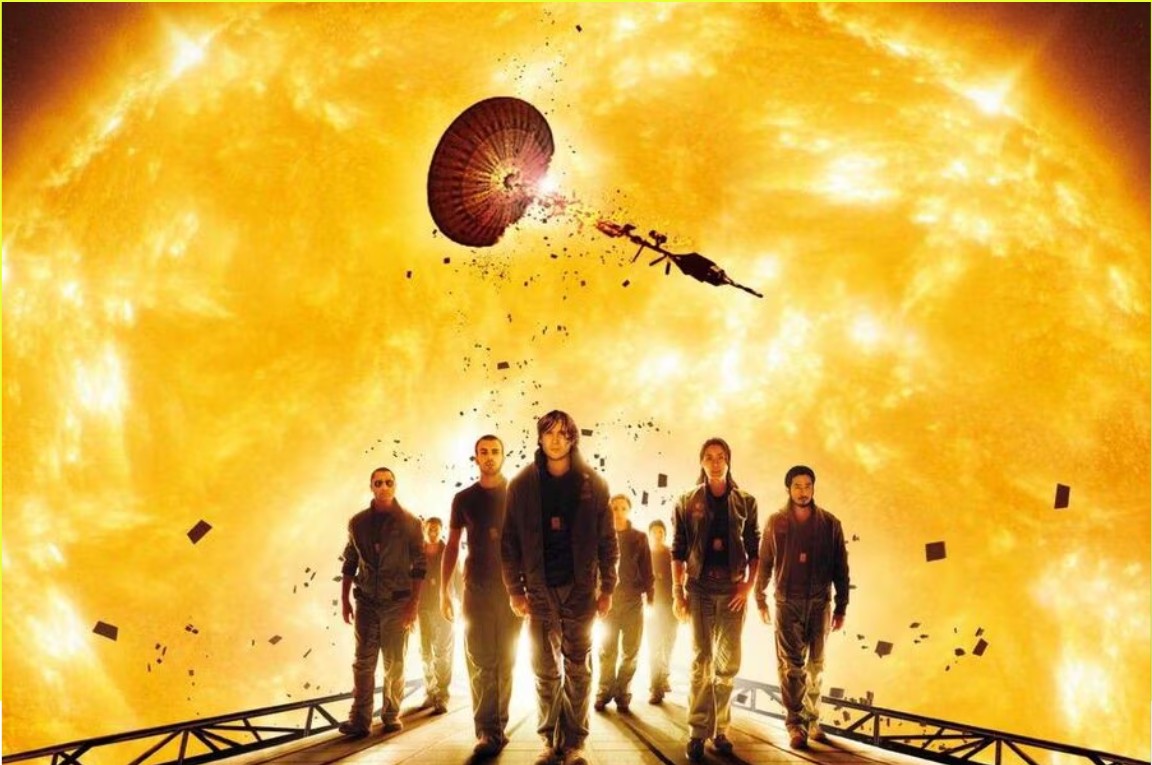
    I have known about the 2007 science fiction thriller film Sunshine for years now and always found the premise interesting, but I hadn’t gotten the chance to see it until this October. I had always heard that it was a very divisive movie, with most people having mixed opinions about it and the review scores being middling at best. The only thing that viewers seem to have formed a consensus on is that there is a sudden and jarring tone shift in the last thirty minutes where the film becomes “basically a slasher” out of nowhere. I knew all of those details going into the movie, so I braced myself for an out-of-place genre shift to take place in the final act.
    I was surprised to find out that no such tone shift occurred and that Sunshine never once changed its genre or label through the entire film. What seemed so obviously to me to be a cosmic horror piece from the very beginning was taken by general audiences as a more grounded science fiction, even though it never once claimed to be one. I was genuinely baffled coming out of it how everyone who saw this film for nearly two decades at this point had missed this. Maybe it was due to audiences in 2007 not having as much familiarity with the cosmic horror genre, or maybe the film’s advertising gave people a false impression of the tone. Regardless, Sunshine is one of the best pieces of space horror ever made and I highly recommend anyone with an interest in the genre to check it out and ignore the general audience’s opinions.

    This is a movie that looks at our own universe and makes the observation that the sun is a vast, unknowable entity that simultaneously gives us life and will destroy us if we look at it too closely. It makes the accurate assessment that it is the closest thing in reality to an outer god like Nyalarthotep or Hastur, and then forces a small group of fragile humans to adapt to its force or die. The final act is just the culmination of this, and a modern adaptation of the classic stories of the cultists who got too close to the entity they worship and were destroyed by it. The constant on-screen distortions and treating or referring to the sun as a “god” throughout the film even by the more scientific-minded characters should have clued more people into this intention, in my opinion, and I hope that it will come to be regarded as a cult classic one day.

  • Thoughts on "Superman"

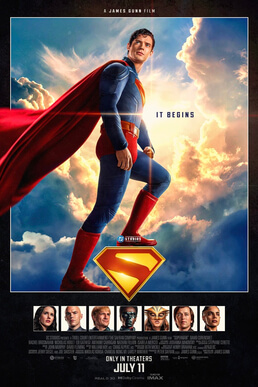
    After decades of dark and “realistic” superhero adaptations that sometimes feel less mature than the comics they’re modeled after, it’s good to know that there are people out there who still understand the appeal and importance of a paragon hero. Superman has gone from the most popular example of what a superhero should be to being a common target of criticism in the 21st century by people who think that a character needs to be morally dubious in order to be interesting. Superman was too good. He was too powerful. He wasn’t realistic because his beliefs and motivation were always rooted in selflessness and kindness. People wanted something “closer to reality”, and so we got alternate universes and comic runs like Injustice. We got dozens of Homelanders and Brightburns and an entire franchise of Zack Snyder’s (Mr. “Batman could get raped in prison in my movies”) interpretations of Clark Kent. We got dark or evil superhero parodies that lauded themselves as “mature deconstructions” by people who read one issue of Watchmen and didn’t realize that Rorschach wasn’t supposed to be the good guy. And after decades of the same regurgitations making the same arguments being successful and popular, we finally get a film that understands what Superman is supposed to be.

    Superman is a power fantasy. The detractors are right about that much. It is the fantasy of what could happen if a person with unimaginable strength decided to use it for good. In a world where deeply evil and powerful men tread on the lives of others with no concern or consequence, Superman is the manifest desire to see a single person be strong enough to stand up to them and tell them “no”. He is the hope that there is still a way to make the world better and that anyone can make a difference. He is the belief that it’s never too late to try and save a life.

    “We thought that by making your world more violent, we would make it more “realistic,” more “adult.” God help us if that’s what it means. Maybe, for once, we could try to be kind.”

    • Grand Morrison in Animal Man, 1990.

    You may not be Superman, but if you would like to help alleviate human suffering around the world, please consider donating to the World Central Kitchen, which provides food assistance to the hungry in places like Gaza, Ukraine, and other parts of the world.

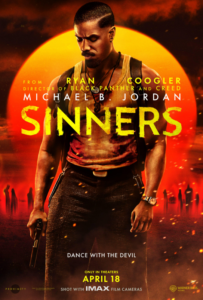
  • Sinners -- A Vampire Movie and So Much More

    It’s such a relief to finally be past the era of the backlash to the Twilight phenomenon that lasted throughout the 2010s where everyone was pretending that vampires weren’t interesting and all stories that featured them were juvenile and worthless. I will die on the hill that vampires are the most useful and poignant folklore monster to add to any story, and that their flexibility in telling a metaphor is what makes them so special. No matter the story, no matter the genre, a vampire is never just a vampire. Regardless of whether or not their writer intended them as an allegory they will always represent something just by their nature of being infectious, life-draining undead. Vampires are addiction, alienation, queerness, freedom, chronic illness, aristocracy, poverty, cults, infestations, or a dozen other things depending on the role they are made to play.

    The vampires in Sinners represent multiple complex themes layered on top of each other in the form of a monster. They are isolation, loneliness, the loss of culture as well as the forcing of culture onto unwilling marginalized communities. They are presented throughout the majority of the film as irredeemable, if sympathetic, victims of a tragedy they couldn’t hope to escape. This makes the ending scene one of the most powerful in modern cinema, as it shows what happens when a vampire is able to maintain a connection with the living world through music and culture. It shows the person behind the monster that we thought was lost, and implies so much about what had previously been shown as bloodthirsty, if sympathetic, creatures of the night. It adds an extra level of melancholy to what had already been a tragedy, while also reigniting hope for the present and future in a single, short conversation. As writers and artists begin to embrace the vampire more openly now that the embarrassing cringe culture surrounding them has dissipated, I hope that Sinners will be looked back on as having some of the best.