 Did you know that less than 1% of all extinct animals have been fossilized? That means that, of all the incredible animals that have walked this earth and have since gone extinct, we will never know about most of them. Not only that, but most extinct animals gain their popularity by their uniqueness or their awe-inspiring nature. Nobody spares a glance towards the dull and the boring; the ones who lived and died in an instant and may as well have never existed at all.
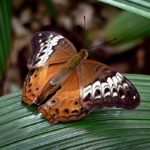
In the late Cretaceous Period, on the fragmented part of land that we would now call the Yucatán Peninsula, there was a butterfly. It was a dull species with no especially noteworthy features to the entomologists of today, as it was an early addition to the butterfly lineage. It only measured three inches even when its muddy brown and black wings were fully outspread. It had poor eyesight and fragile legs that could snap in half at the slightest bit of strain. It was a frequent victim to insectivores of the area, as it had no way to defend itself besides its earthy camouflage.
This butterfly was native to a small patch of grassland that was home to a wide variety of flowers in the summer. The highest its population ever grew was to only around ten thousand, and it never ventured far outside its range without risking predation or starvation. It was a boring creature, neither unique enough to be interesting or beautiful enough to be admired. If a modern human witnessed one out in the wild, they wouldn’t spare a thought towards it or even remember it once the day had passed. This Cretaceous butterfly was a mundane creature that led an uneventful existence that changed very little year to year. Then one day every single one of them was obliterated in the blink of an eye.
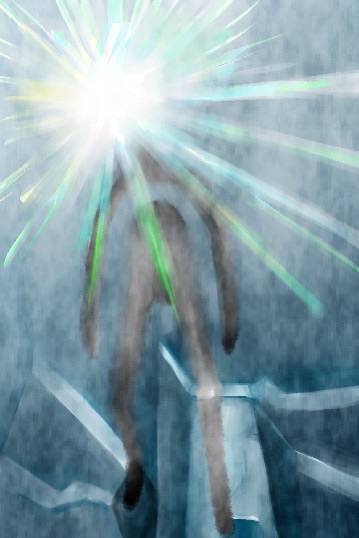
They felt no pain. There was no horror or suffering in their demise, nor was there understanding. Ground zero of Chicxulub was the kindest fate an organism could suffer on this day, as the air itself was set alight and anything organic at the point of impact was rendered to dust in less time than it would take a neuron to fire. While the fallout was spectacular and the suffering that followed apocalyptic, the demise of the butterfly was almost serene. One moment it was here. Then it was gone. Every single one of them, in an instant, vanished as if they never existed at all.
It left no ancestors and no remains. Not even the flowers it fed on made an impact on the fossil record. To the eyes of the universe and the perception of the only species intelligent enough to grasp the complexity of impermanence, it never existed in the first place. There was no way to ever know about it, after all. It was as if Schrödinger lifted the lid to find the cat had disappeared along with the memory of anyone who knew it, and he was left wondering why he even opened the box to begin with. When discussing the enormity of extinction, there is spectacle to be found in the bones of beasts before our time. Once, long before any ape entertained the thought of standing upright, there were monsters who walked the earth. They bellowed and stampeded and waged war against each other for millions of years, but it all came to a tragic end due to factors beyond their control and understanding. Now they exist only as ghosts carved in stone, an eternal monument to an empire long gone and creatures so unique that they will never again set foot on this little blue rock.
Who mourns for the Chicxulub butterfly? Who cries for the population of minnows only a hundred strong that is wiped out entirely when the river shifts? Who will sing for the overwhelming majority of all living things that were not preserved in stone? Who didn’t have the luxury of being reconstructed and recalled by a species that could carry on their undying memory? Can it truly be said that they ever existed at all? For all the living beings that were too fragile or too dull or just too unlucky to be remembered like the great monsters of the Cretaceous, who will weep for them?
Perhaps their fossils haunt us too. Perhaps their ghosts cling to this world, an echoing hollow of nonexistence that howls at its own paradoxicality. Perhaps the emptiness they left behind them is proof of their existence, just as the absence of something can become its presence.
Perhaps, if you ever visit the Yucatán and gaze upon the splendor of its forests and its beaches and its palm trees, you might just see a little brown blur out of the corner of your eye. You might feel an odd sadness come upon when you do. Hold onto this sadness and remember that it might be the remnant of a long dead shadow with no mouth, lips, or lungs that is still trying its best to sing.
